Global Gene Therapy Market By Overview
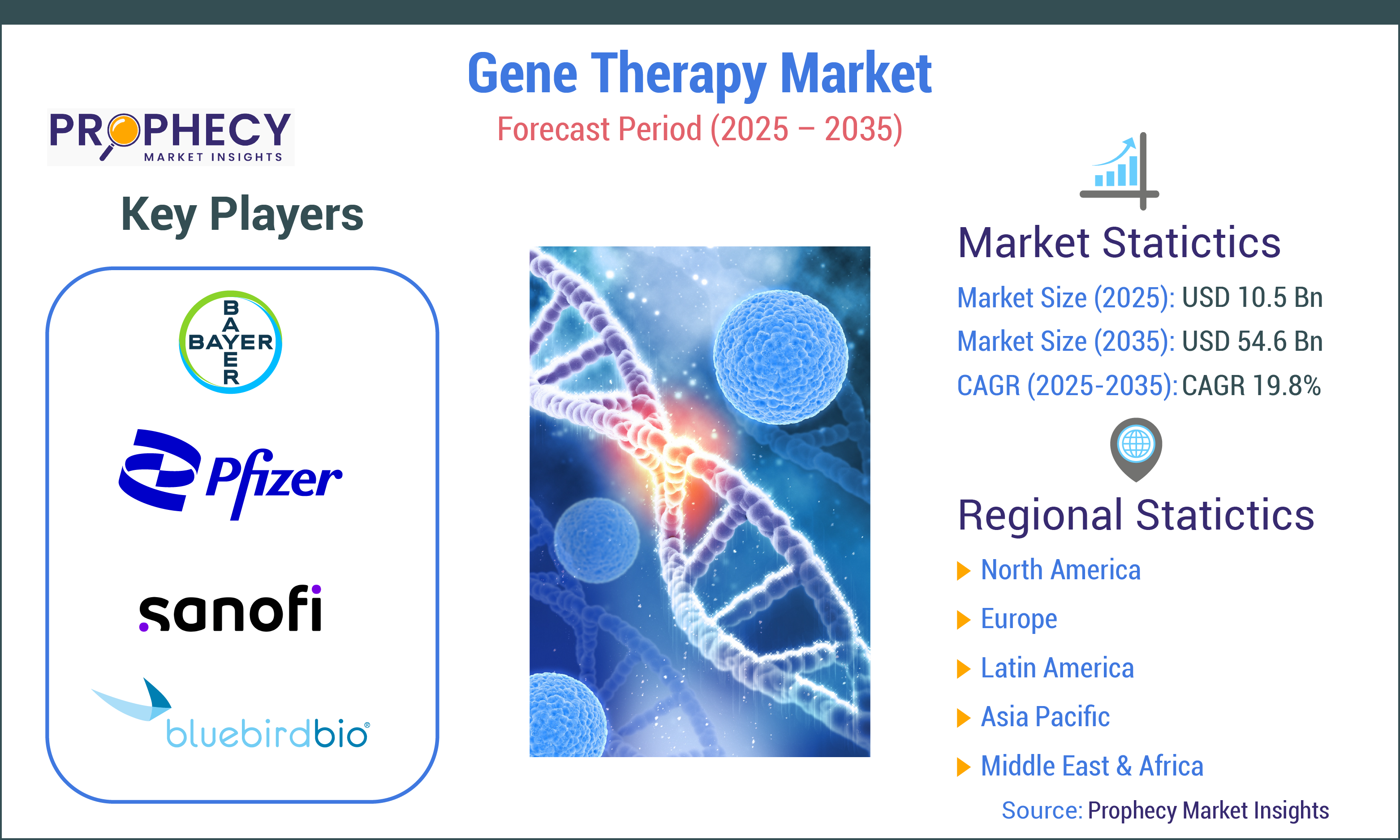
- By 2035, the gene therapy market size is contemplated to enlarge at a valuation of USD 54.6 Billion.
- In 2024, the gene therapy market valuation was USD 9.0 Billion.
- Gene therapy market is developing at a CAGR of 19.8%.
Medical professionals use gene therapy to fix or substitute defective genes which helps cure or stop diseases from progressing. The technique works by addressing genetic disorders directly through methods which add or eliminate genetic material inside patient cells. The medical field applies gene therapy to handle genetic diseases that are passed down through families as well as specific cancers and viral illnesses.
The pipeline demonstrates sufficient strength to accelerate market expansion throughout the forecast period. Scientists currently develop therapeutic gene delivery methods for use in medical clinics. Multiple academic institutions along with research organizations maintain diverse product pipelines which will drive revenue growth throughout the forecast period. The number of gene therapy clinical trials rose sharply between 2017 and 2018 following the first FDA approval of a gene therapy. For instance, In June 2018, Spark Therapeutics received the FDA approval for LUXTURNA for the treatment of RPE65-mediated inherited retinal disease.
The biopharmaceutical companies and hospitals & clinics landscape are rapidly growing as biotech companies join forces with pharmaceutical giants to advance their developments through late-stage processes and commercialize their products while venture capital investment shows continuous growth. The industry now targets widespread conditions such as neurological diseases and ophthalmological disorders alongside rare diseases to create substantial market opportunities.
Recession Risk & Tariff Analysis:
- The gene therapy market faces significant obstacles due to recession risk and tariff uncertainties. The possibility of worldwide economic deceleration could decrease medical spending and postpone scientific support and reduce patient availability for expensive gene therapies throughout developing nations.
- Trade tariffs imposed by the U.S. and China and European Union have raised expenses for necessary manufacturing components and production equipment including viral vectors and plasmids. These policies create supply chain disturbances which result in extended production periods and higher manufacturing costs for therapeutic products.
Impact of Generative AI on Gene Therapy Market:
- The gene therapy market undergoes major transformation as Generative AI speeds up both research as well as development and production activities. The growing adoption of gene therapies depends on generative AI as a fundamental innovation driver which both shortens market entry time and decreases expenses and enhances therapeutic success.
- Generative AI helps clinical trials improve their efficiency through better patient grouping methods and instant data evaluation. The technology allows researchers to quickly develop genetic sequences while simultaneously optimizing them so they can target diseases better and create more precise gene delivery systems.
Global Gene Therapy Market By Drivers & Restraints
Key Drivers:
Expanding Gene Therapy Pipeline Fuels Robust Market Growth
The market expands due to the increasing quantity of gene therapy products which are currently under development. The rising number of therapies advancing through clinical trials for rare diseases along with cancer and neurological disorders leads to heightened investor confidence and increased industry activity. The growing pipeline demonstrates strong innovation which boosts the chances of new approvals thus accelerating the market's overall expansion.
- For instance, according to American Society of Gene & Cell Therapy there are currently 3,633 therapies in the pipeline—55% are gene, 22% are non-genetically modified cell, and 23% are RNA—from preclinical through pre-registration. For the first time since mid-2021, the number of gene therapies in phase I has increased, rising by 4% since last quarter.
Restraints:
High Costs and Access Barriers Disrupts Market Growth
The rising occurrence of chronic conditions including SMA and cancer does not reduce the fact that the treatment approach costs a substantial amount. The method is majorly advertised as a single dose treatment regime that reverses the genetic dysfunction in the patient’s body. Reimbursement challenges and limited insurance coverage further restrict patient access despite the therapy's long-term value.
- For instance, according to Novartis AG, a single dose of Kymriah, the therapy cancer drug costs a whopping USD 475,000. The same drug is priced at USD 306,000 in Japan.
Counterbalance Statements: The high initial expense of gene therapy provides a lasting solution which proves to be more cost-effective than ongoing treatment expenses over time. Different healthcare providers and insurance companies are testing new payment structures which include outcome-based reimbursement and installment payment methods to increase access to these treatments.
Opportunities & Trends:
Developed Nations Shift to Viral Vectors Over Traditional Treatments
Developed countries are now applying high-tech medical solutions for their long-term illnesses. The advanced treatment options have started replacing traditional methods like chemotherapy due to their long-lasting negative effects and harsh side effects. The medical industry now prefers viral vectors since they deliver strong immune reactions. There is also a shift towards the adoption of viral vectors that provides high immunogenicity and lower toxicity for the development of such therapies.
Global Gene Therapy Market By Segmentations & Regional Insights
Therapy, delivery method, vector type, indication, technology, route of administration, end user and region are the divisions of the gene therapy market.
By Therapy:
Germline gene therapy, somatic gene therapy, are therapy on which gene therapy market is segmented. The gene therapy market currently relies on somatic gene therapy as its primary treatment approach. The treatment focuses on non-reproductive cells which means it remains ethically appropriate and prevents genetic modifications from affecting future generations. Medical practitioners apply somatic therapies extensively to treat cancer and genetic disorders as well as rare diseases.
The somatic gene therapy segment dominates the market but germline gene therapy shows growing dominance as the second leading segment as it focuses on research and experimental procedures. The clinical application of this therapy remains limited due to ethical and regulatory restrictions but technological progress in CRISPR and rising concern about hereditary disease prevention have boosted research efforts in this field.
By Delivery Method:
Based on the delivery method, the gene therapy market is divided into in vivo and ex vivo. The in vivo delivery approach maintains leading market dominance as it enables straightforward direct injection of genetic material into patient bodies which reduces treatment complexity. Medical professionals prefer this technique for diseases involving liver and muscle tissues and the eyes since viral vectors including AAVs demonstrate excellent efficiency in targeted delivery.
The gene therapy market ranks ex vivo delivery as its second most important segment. The procedure begins with the removal of patient cells before modification in a laboratory setting and ends by returning these modified cells to the patient which provides enhanced control over gene editing procedures and cell selection processes.
By Vector Type:
Adeno-associated virus (aav), lentivirus, retrovirus, liposomes and others are vector type of the gene therapy market. The gene therapy market primarily uses adeno-associated virus (AAV) vectors as these vectors demonstrate excellent safety results while showing minimal immune system activation and they effectively transport genetic material to both dividing and non-dividing cellular populations.
Lentiviral vectors stand as the second most popular vector type within the gene therapy market as researchers prefer them for ex vivo procedures involving CAR-T cell therapies as well as β-thalassemia and sickle cell disease blood disorder treatments. The vectors insert genetic sequences into the host genome which allows them to maintain continuous gene expression over extended periods.
By Indication:
Oncology, neurological disorders, cardiovascular diseases, ophthalmological disorders, rare genetic disorders, infectious diseases and others are indication of the gene therapy market. Oncology is the leading indication within the gene therapy industry, claiming the greatest number of clinical trials and commercial uses. Gene therapies for cancer, including CAR-T cell therapies and oncolytic viruses, have been highly successful in treating hematologic malignancies and some solid tumors.
Neurological disorders are the second most common reason people seek gene therapy, mainly due to there's a huge need for effective treatments for serious conditions like spinal muscular atrophy (SMA), Parkinson's disease, and amyotrophic lateral sclerosis (ALS). Gene therapy offers targeted, long-lasting solutions for these illnesses, many of which currently have very few or no treatment options at all.
By Technology:
Gene Augmentation are leading the segment regarding gene therapy market as they offer secure, dedicated and highly customizable connectivity for accurate needs and requirements of hospitals & clinics operations. Gene Augmentation are ideal for battlefield communications, remote surveillance systems and securing command centers with entire data flow control, latency and security.
Gene augmentation is the leading technology in the gene therapy industry, and it is mainly employed to treat genetic diseases that result from deficient or non-functional genes. Gene augmentation entails the delivery of a functional gene copy into the cells of the patient to replace the normal protein manufacturing and thus remedy the root disease.
By Route of Administration:
Intravenous (IV) infusion is by far the most common way gene therapy is delivered, largely as it allows the therapeutic genes to spread throughout the whole body. This method is heavily used for treating conditions such as spinal muscular atrophy, hemophilia, and certain types of cancer, especially when the treatment needs to reach every part of the body.
Intramuscular administration is the second most popular method in the gene therapy market. This method is particularly useful for delivering treatments right to the specific tissues that need them, like in cases of muscular dystrophies or certain vaccine-related gene therapies. It's ideal as it zeroes in on the affected area, keeps the drug from spreading too widely throughout the body, and has a really good safety track record.
By End-User:
Hospitals and clinics are the major end-users of the gene therapy market, being the first points of care where gene therapies are dispensed to patients. These institutions are well equipped with the specialized infrastructure and trained professionals necessary to deal with complicated therapies, such as storage, preparation, and monitoring after treatment.
Biopharmaceutical firms are the second leading end-user segment in the gene therapy industry, and they have a key role in R&D, manufacturing, and research for gene-based therapies. Biopharmaceutical firms are leaders in innovation, spearheading clinical trials, winning regulatory approvals, and expanding manufacturing scales.
Regional Insights:
Geographically, the gene therapy market is studied across North America, Europe, Asia Pacific, Latin America, and the Middle East & Africa.
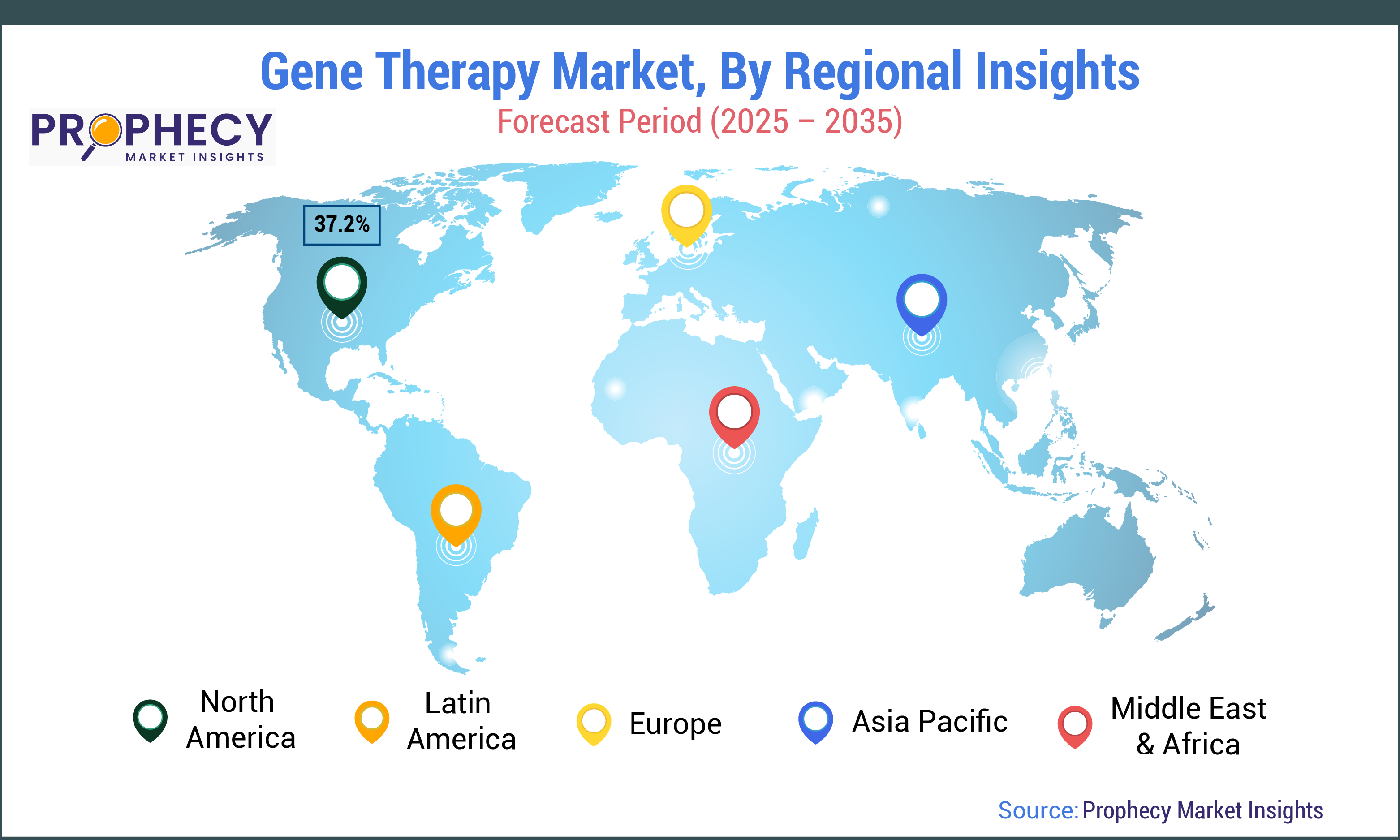
North America: This region holds a leading position in the gene therapy market share with 37.2% due to its strong research base, large investments in healthcare, and supportive regulations. The U.S. is at the front in clinical trials, approved treatments, and market utilization. This is aided by important companies, universities, and backing from the government via initiatives such as the FDA’s fast approval processes.
- U.S. Gene Therapy Market Insights:
The U.S. is the foremost country in the North American gene therapy market. It is a global leader in gene therapy research, trials, and approvals from regulators. This is due to the U.S. has strong support from the government, robust financing, and an advanced biotech area. Big biopharmaceutical firms, top research centers, and support from the FDA help the U.S. gene therapy market grow.
Europe: This region holds the second-largest gene therapy market share owing to its stringent regulations, rising financial support for new treatments, and well-developed healthcare infrastructures. Germany, the U.K., and France are at the front of clinical studies and making products, and the European Medicines Agency (EMA) aids in approving medications across the region.
- Germany Gene Therapy Market Insights:
Germany holds a leading position in the gene therapy market in Europe. This is backed by its strong biotech industry, good healthcare, and helpful regulations. The country has many clinical trials and research projects. Also, some top biotech firms that work on gene and cell therapies are based there.
Asia Pacific: This region is experiencing significant market for gene therapy due to more investment in healthcare, a rise in genetic diseases, and better regulations. Countries such as China, Japan, and South Korea are leading the way. China, in particular, has seen many clinical trials and biotech innovations due to backing from governmental investments and policies.
- China Gene Therapy Market Insights:
China has a lead in the Asia-Pacific gene therapy market due to backing from the government, growing facilities for biotech, and many clinical trials. The Chinese government has made gene and cell therapy a priority in its health and innovation plans. This has resulted in increased funding, changes to regulations, and partnering with global biotech companies.
Gene Therapy Market Report Scope:
|
Attribute |
Details |
|
Market Size 2025 |
USD 10.5 Billion |
|
Projected Market Size 2035 |
USD 54.6 Billion |
|
CAGR Growth Rate |
19.8% (2025-2035) |
|
Base year for estimation |
2024 |
|
Forecast period |
2025 – 2035 |
|
Market representation |
Revenue in USD Billion & CAGR from 2025 to 2035 |
|
Regional scope |
North America - U.S. and Canada Europe – Germany, U.K., France, Russia, Italy, Spain, Netherlands, and Rest of Europe Asia Pacific – China, India, Japan, Australia, Indonesia, Malaysia, South Korea, and Rest of Asia-Pacific Latin America - Brazil, Mexico, Argentina, and Rest of Latin America Middle East & Africa – GCC, Israel, South Africa, and Rest of Middle East & Africa |
|
Report coverage |
Revenue forecast, company share, competitive landscape, growth factors, and trends |
Segmentation:
By Therapy:
- Germline Gene Therapy
- Somatic Gene Therapy
By Delivery Method:
- In Vivo
- Ex Vivo
By Vector Type:
- Adeno-Associated Virus (AAV)
- Lentivirus
- Retrovirus
- Liposomes
- Others
By Indication:
- Oncology
- Neurological Disorders
- Cardiovascular Diseases
- Ophthalmological Disorders
- Rare Genetic Disorders
- Infectious Diseases
- Others
By Technology
- Gene Augmentation
- Gene Silencing
- Gene Editing
- Others
By Route of Administration
- Intravenous (IV) Infusion
- Intramuscular
- Intrathecal
- Others
By End User
- Hospitals & Clinics
- Biopharmaceutical Companies
- Others
By Region:
- North America
- U.S.
- Canada
- Europe
- Germany
- U.K.
- France
- Russia
- Italy
- Spain
- Netherlands
- Rest of Europe
- Asia Pacific
- China
- India
- Japan
- Australia
- Indonesia
- Malaysia
- South Korea
- Rest of Asia Pacific
- Latin America
- Brazil
- Mexico
- Argentina
- Rest of Latin America
- Middle East & Africa
- GCC
- Israel
- South Africa
- Rest of Middle East & Africa
Global Gene Therapy Market By Competitive Landscape & Key Players
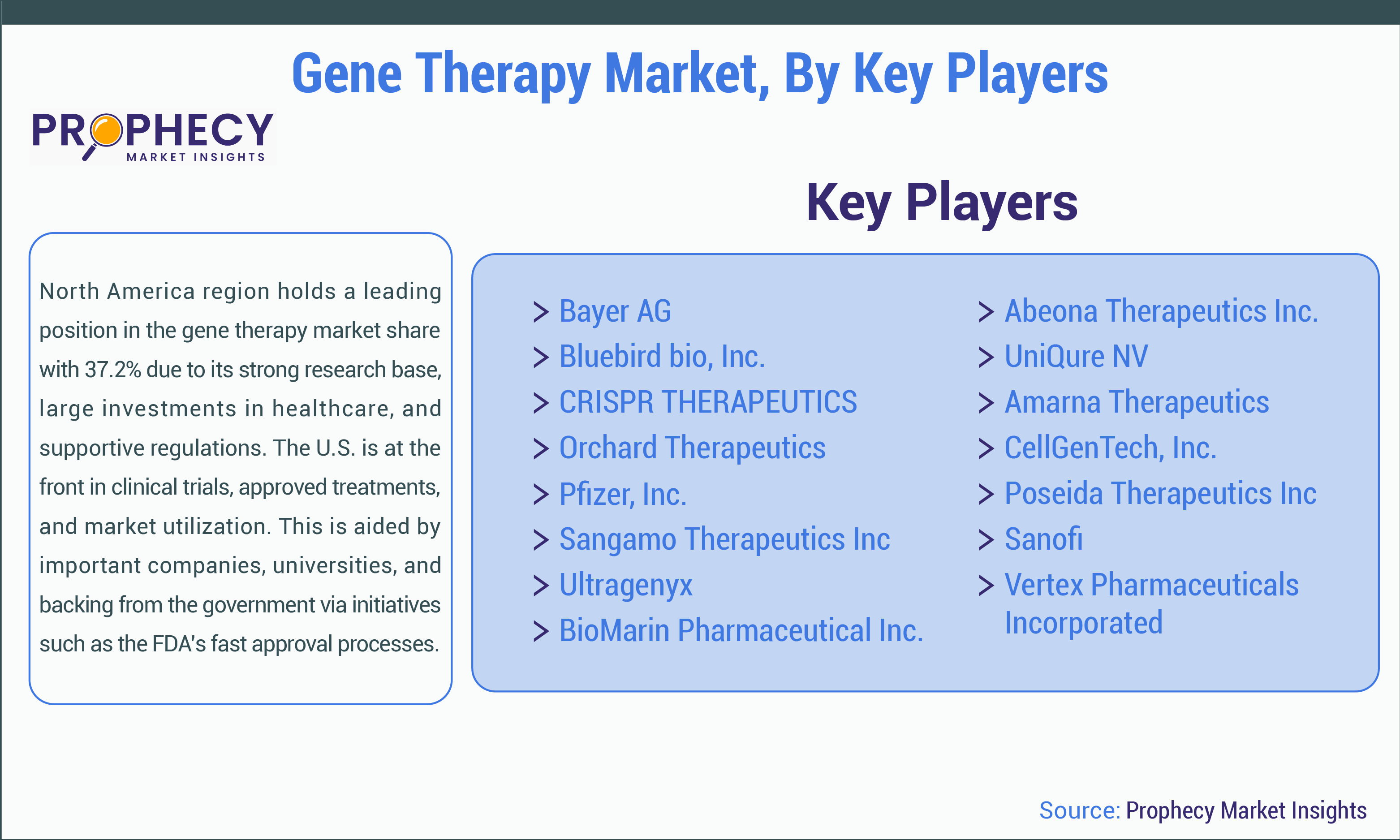
Gene therapy organizations are working to create treatments with a high safety profile, are effective, and offer sustained results by targeting the basic causes of genetic and long-term diseases. Their shared objectives are to improve delivery methods, lower the cost of treatments, increase access globally, and get approval from governing bodies. The key players operating in the gene therapy market include, Bayer AG, Bluebird bio, Inc., Sangamo Therapeutics Inc, VERRA, Orchard Therapeutics, and others.
Gene Therapy Market Companies:
- Bayer AG
- Bluebird bio, Inc.
- CRISPR THERAPEUTICS
- BioMarin Pharmaceutical Inc.
- Orchard Therapeutics
- Pfizer, Inc.
- Sangamo Therapeutics Inc
- Ultragenyx
- Abeona Therapeutics Inc.
- Vertex Pharmaceuticals Incorporated
- UniQure NV
- Amarna Therapeutics
- CellGenTech, Inc.
- Poseida Therapeutics Inc
- Sanofi
View an Additional List of Companies in the Gene Therapy Market
Global Gene Therapy Market By Recent News
- In January 2024, Biogen and Ginkgo Bioworks announced the completion of their gene therapy collaboration involving AAV based vectors. This is expected to fuel the demand for gene therapies in the coming years.
- In November 2024, Sarepta announced a global licensing and collaboration agreement with Arrowhead Pharmaceuticals for multiple clinical and preclinical-stage programs in muscle, central nervous system, and rare pulmonary disorders, including potential best-in-class siRNA-based treatments for myotonic dystrophy type 1 (DM1) and facioscapulohumeral muscular dystrophy (FSHD).
- In January 2023, Voyager Therapeutics and Neurocrine Biosciences entered into a strategic collaboration for the commercialization & development of Voyager’s GBA1 program and other next-generation gene therapies for neurological diseases
- In January 2023, Spark Therapeutics and Neurochase established a strategic collaboration to develop Neurochase’s unique delivery technology for use with selected gene treatments for rare disorders in the CNS. In this agreement, Neurochase will contribute its extensive knowledge in direct drug delivery technology to Spark’s premier AAV platform.
Analyst View:
Gene therapy is under increasing scrutiny after safety issues and leadership shake-ups at the FDA. The gene therapy field has felt the impact of a wider downturn in venture funding and merger activity. Industry investment decreased in 2021 to roughly USD 1.4 billion last year, as many investors turned to areas like obesity drugs that seem to offer quicker profits. In summary, analysts believe the gene therapy field is at a pivotal moment. Short-term headwinds include safety issues, regulatory shifts, and capital constraints.
More Related Reports
Cell and Gene Therapy Manufacturing Market
Genetic Testing Market
Genotyping Assay Market
Personalized Gene Therapy Treatment Market
Pet Cancer Therapeutics Market
Global Gene Therapy Market By Company Profile
|
Company Name |
Pfizer, Inc |
|
Headquarter |
New York, United States |
|
CEO |
Albert Bourla |
|
Employee Count |
88,000 Employees |
Global Gene Therapy Market By Highlights
FAQs
Gene therapy market size was valued at USD 10.5 Billion in 2025 and is expected to reach USD 54.6 Billion by 2035 growing at a CAGR of 19.8%.
Therapy, Delivery Method, Vector Type, Indication, and region are the segmentation for the target market.
North America, Asia Pacific, Europe, Latin America, and the Middle East & Africa. North America is expected to dominate the market.
The key players operating the Gene therapy market include Bayer AG, Bluebird bio, Inc., CRISPR THERAPEUTICS, BioMarin Pharmaceutical Inc., Orchard Therapeutics, Pfizer, Inc., Sangamo Therapeutics Inc, Ultragenyx, Abeona Therapeutics Inc., Vertex Pharmaceuticals Incorporated, UniQure NV, Amarna Therapeutics, CellGenTech, Inc., Poseida Therapeutics Inc, and Sanofi.