Global Toddler Sippy Cups Market Overview
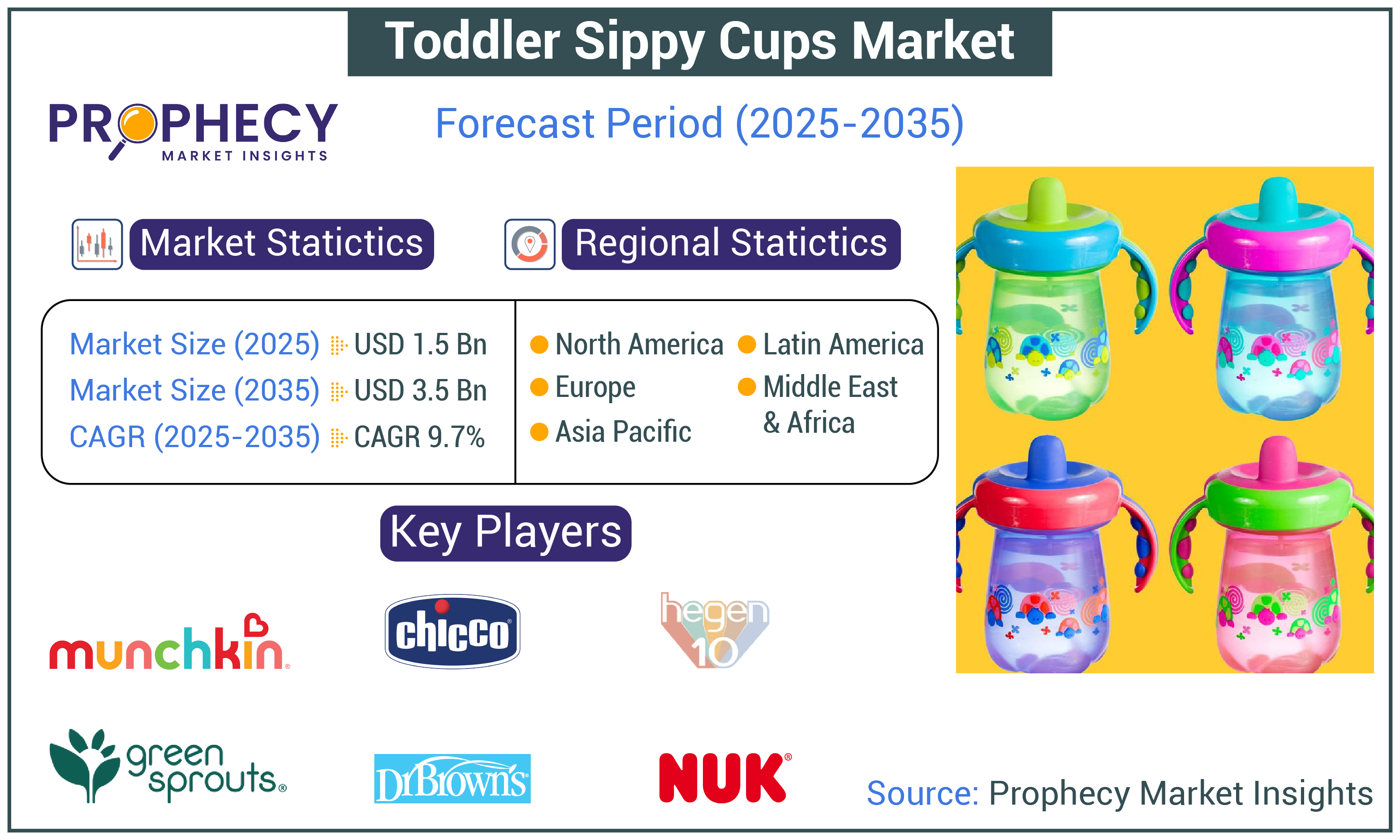
- By 2035, the toddler sippy cups market size is contemplated to enlarge at a valuation of USD 3.5 Billion.
- In 2024, the toddler sippy cups market valuation was USD 1.4 Billion.
- Toddler sippy cups market is developing at a CAGR of 9.7%.
Toddler sippy cups are specifically made drinking cups with spill-proof lids and easy-to-hold handles that assist young children in making the switch from bottles to ordinary cups. They reduce mess with their leak-proof features, encourage independence by letting toddlers drink independently, and support healthy oral development with straws or soft spouts. Constructed from secure, frequently BPA-free materials, they provide parents with a practical and sanitary way to feed their children at home and on the go.
Due to a number of important considerations, the toddler sippy cups market has grown significantly. Parents are becoming more conscious of how crucial it is to move children from bottles to cups in order to support the development of their motor skills and oral health. Convenient, safe, and spill-proof feeding options are in high demand as the number of working parents rises. Concerns about the sustainability of the environment and the health of children are also driving an increasing demand for eco-friendly and BPA-free materials. These products are now more widely available thanks to the advent of online retail channels, which is propelling toddler sippy cups market expansion.
A significant trend influencing toddler sippy cups market is the move toward environmentally friendly materials including silicone, stainless steel, and BPA-free plastics, which reflects growing consumer awareness of environmental and health issues. Smart sippy cups with features consisting of Bluetooth connectivity and hydration tracking are being introduced by technological improvements to appeal to tech-savvy parents. Parents may now add a personal touch to their children's purchases with the growing popularity of customization options, such as customized colors and designs.
Recession Risk & Tariff Analysis:
- The toddler sippy cups market is vulnerable to moderate recession and tariff threats as parents may choose generic or less expensive items over name-brand ones during recessions.
- Tariffs on imported raw materials, such as stainless steel and BPA-free plastics, can increase the cost of manufacturing, particularly for businesses that depend on international supply chains.
- Due to the necessity of toddler feeding products, demand is still largely stable, but ongoing trade disputes and economic stress may put pressure on corporate margins and cause consumers to choose less expensive solutions.
Impact of Generative AI on Toddler Sippy Cups Market:
- By improving marketing tactics, personalizing customer experiences, and simplifying product design, generative AI has the potential to revolutionize the toddler sippy cup market.
- AI may be used by manufacturers to quickly prototype ergonomic designs and model spill-proof mechanisms, cutting down on development expenses and time. AI-driven chatbots and virtual assistants can also help parents choose products by providing tailored recommendations based on certain requirements including age, material preferences, or developmental milestones.
Global Toddler Sippy Cups Market Drivers & Restraints
Key Drivers:
The Market is Maturing Progressively due to the Rising Number of Working Parents
The toddler sippy cups market has become bigger due to large part to the growing number of working parents, which raises demand for dependable, time-saving, and convenient feeding options. Parents who have hectic schedules and little time for conventional feeding techniques look for goods that are portable, easy to clean, and spill-proof features that sippy cups provide. Furthermore, working parents are inclined to spend money on reputable, long-lasting brands that complement their way of life, which increases demand for cutting-edge features including age-appropriate designs, non-toxic materials, and insulated mugs. Since parents want quick and easy buying alternatives, this demographic trend also increases sales through online platforms.
- For instance, according to the data published by WONDER, working parents account for an estimated 34.52% of the global workforce in English-speaking countries. the percentage of working parents with dependent children in the workforce in the US, UK, Australia, and Canada is 31.62%, 38.58%, 35.15%, and 32.74% respectively.
Restraints:
Safety Concerns over Material Toxicity may Impedes the Market Development
Hazardous substances involving BPA (Bisphenol A), phthalates, and lead are the main sources of safety concerns regarding material toxicity in toddler sippy cups. These chemicals can seep into liquids and present health risks, including hormone disruption or developmental problems in young children.
- Counterbalance Statements: Food-grade silicone, stainless steel, and BPA-free plastics all of which are non-toxic and safe for extended contact with liquids have been used by manufacturers in response to these worries.
Opportunities & Trends:
Consumer Awareness of Environmental can Propel Market Diversification in Upcoming Years
As parents place a greater emphasis on safe, environmentally friendly, and non-toxic items for their kids, there is a big chance for the toddler sippy cup market to grow as a result of consumer knowledge of environmental and health issues. Demand for sippy cups made of eco-friendly materials including food-grade silicone, bamboo, and stainless steel is rising as worries about plastic waste and the possible negative effects of chemicals comparable to BPA grow. Customers that care about the environment are going to be drawn to brands that prioritize eco-friendly production practices, such as employing recyclable materials or providing reusable goods. In addition to being in line with consumers' increasing desire for sustainability, this trend presents a chance for producers to stand out in a crowded market.
- For Instance, according to the data published by Consumers International, 62% of consumers are willing to changing their purchasing habits to reduce environmental impact. 94% of consumers support the shift to a green economy.
Global Toddler Sippy Cups Market Segmentations & Regional Insights
Material type, closure type, design features, brand ownership, and region are the divisions of the toddler sippy cups market.
By Material Type:
Plastic type, glass type, and stainless steel type are material type on which toddler sippy cups market is segmented. With almost 58% of the market, plastic sippy cups have the biggest toddler sippy cups market share. Their widespread availability, low cost, and lightweight design are the main reasons for their popularity. Due to their low production costs, plastic sippy cups are available to a wide variety of customers.
With about 30% of the market, glass sippy cups are the second most popular material type. Glass is preferred by parents who are concerned about their health as it is chemical-free and simple to clean.
By Closure Type:
Based on the closure type, the toddler sippy cups market is divided into straw closure, spout closure, flip-top closure, and others. With more than 62.6% of the market, spout closure types are the most common. They are a popular option for parents switching their toddlers from bottles to cups because of their low cost, simplicity of use, and ability to stop spills.
The second most common style of straw closure is becoming more popular due to its advantages for fostering oral motor development. By encouraging the use of various face muscles, these cups help toddlers develop their speech and healthy teeth.
By Age Group:
< 12 months, 12 to 24 months, 2 to 4 years, and > 4 years are age group of the toddler sippy cups market. The highest market share is held by the 2–4-year-old age group. Products that encourage autonomous drinking while reducing spillage are necessary since toddlers in this stage are strengthening their motor skills and switching from bottles to normal cups, which accounts for this dominance.
The second-largest age group is those aged 12 to 24 months. Children start to show signs of independence during this time, and sippy cups help them reach this developmental milestone.
By Design Features:
On the account of design features, the market is categorized into two-hand grip sippy cups, training sippy cups, insulated sippy cups, and others. Instruction Sippy Cups are the market leader. These cups, which have soft spouts, spill-proof designs, and ergonomic handles that support growing motor skills, are especially made to help toddlers make the switch from bottles to ordinary cups.
The second most popular product on the market is insulated sippy cups. Parents looking for ease for on-the-go feeding will find their capacity to keep drinks at a consistent temperature appealing.
By Brand Ownership:
Private label brands, established national brands, eco-friendly brands, and others are segments of the toddler sippy cups market. The biggest toddler sippy cups market share is held by well-known national brands including Tommee Tippee, Philips Avent, Munchkin, and NUK. Strong brand recognition, wide distribution networks, and a reputation for quality and safety all of which promote consumer trust are the main reasons for their supremacy.
The second-largest market is private label brands. Retailers' own brands appeal to consumers on a tight budget as they provide affordable substitutes for national brands.
Regional Insights:
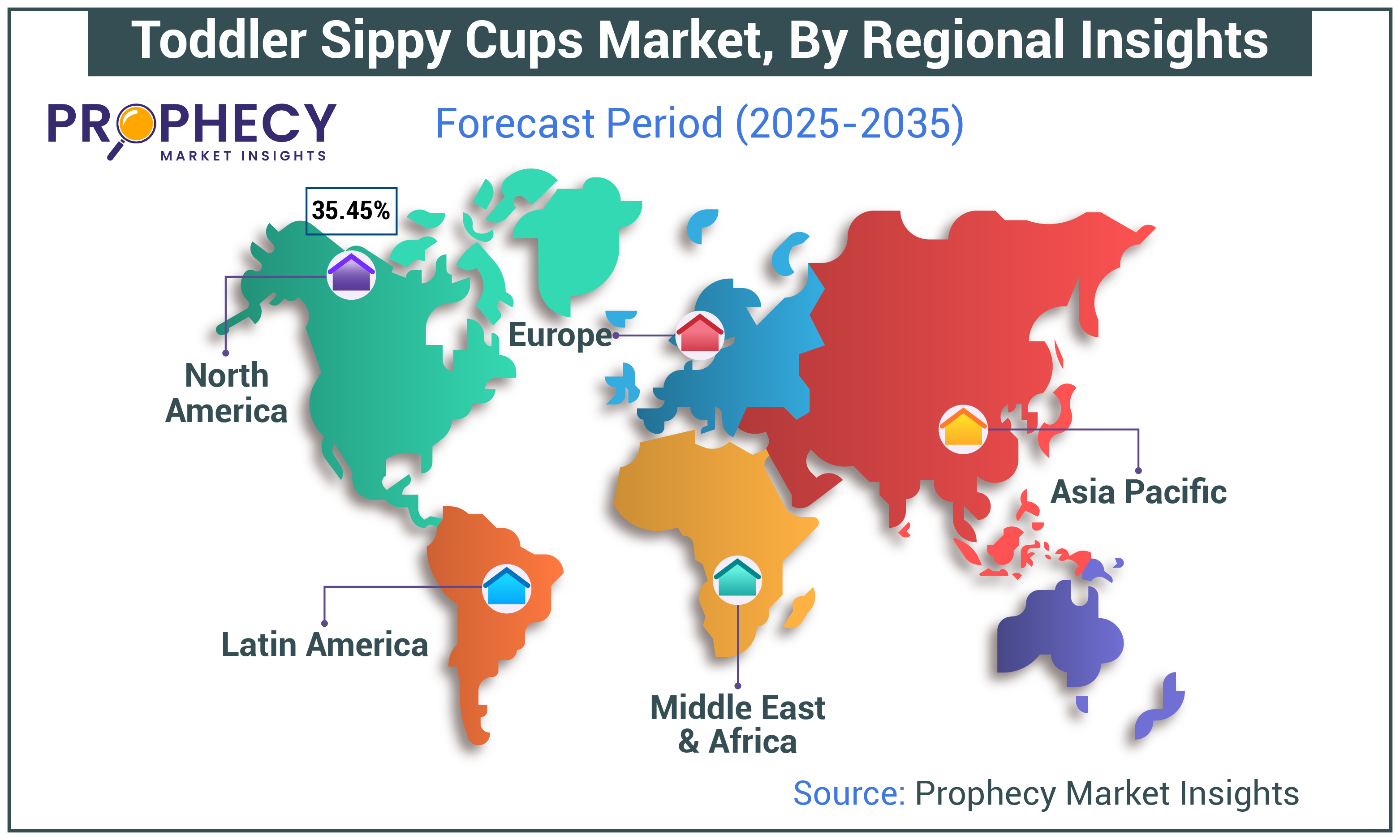
Geographically, the toddler sippy cups market is studied across North America, Europe, Asia Pacific, Latin America, and the Middle East & Africa.
North America: The toddler sippy cups market is dominated by North America, mainly due to the region's high level of consumer safety awareness, robust purchasing power, and extensive availability of high-end baby products via both online and physical channels. The region's supremacy is further influenced by the existence of well-known companies, the early adoption of cutting-edge baby care products, and strict safety regulations.
- U.S. Toddler Sippy Cups Market Insights:
Due to its huge number of young children, significant consumer expenditure on childcare items, and the presence of well-known brands including Munchkin, NUK, and Philips Avent, the United States leads the toddler sippy cups market.
Europe: Due to increased birth rates in several nations, a growing emphasis on eco-friendly and non-toxic materials, and encouraging government programs that support child health, Europe is now the second most dominant region. Additionally, the growing demand from European consumers for high-quality, sustainable parenting products propels regional market expansion.
- Germany Toddler Sippy Cups Market Insights:
Germany is the market leader due to its well-established baby care sector, strong customer desire for premium and environmentally friendly products, and high degree of confidence in regulatory standards. The demand for BPA-free and recyclable sippy cup solutions is also fueled by Germany's emphasis on sustainability and health-conscious parenting.
Asia Pacific: This region toddler sippy cup market is expanding rapidly as a result of increased urbanization, rising birth rates, and an expanding middle class with more disposable means. Market expansion is also fueled by growing e-commerce and retail channels, which provide more access to branded infant care goods and raise awareness of child health and hygiene.
- China Toddler Sippy Cups Market Insights:
China is the market leader owing to its high infant and toddler population, fast urbanization, and presence of both domestic and foreign makers of baby products. China continues to dominate the APAC market thanks to its expanding consumer base and rising willingness to spend money on high-quality parenting products.
Toddler Sippy Cups Market Report Scope:
|
Attribute |
Details |
|
Market Size 2025 |
USD 1.5 Billion |
|
Projected Market Size 2035 |
USD 3.5 Billion |
|
CAGR Growth Rate |
9.7% (2025-2035) |
|
Base year for estimation |
2024 |
|
Forecast period |
2025 – 2035 |
|
Market representation |
Revenue in USD Billion & CAGR from 2025 to 2035 |
|
Regional scope |
North America - U.S. and Canada Europe – Germany, U.K., France, Russia, Italy, Spain, Netherlands, and Rest of Europe Asia Pacific – China, India, Japan, Australia, Indonesia, Malaysia, South Korea, and Rest of Asia-Pacific Latin America - Brazil, Mexico, Argentina, and Rest of Latin America Middle East & Africa – GCC, Israel, South Africa, and Rest of Middle East & Africa |
|
Report coverage |
Revenue forecast, company share, competitive landscape, growth factors, and trends |
Segmentation:
By Material Type:
- Plastic Type
- Glass Type
- Stainless Steel Type
By Closure Type:
- Straw Closure
- Spout Closure
- Flip-Top Closure
- Others
By Age Group:
- < 12 Months
- 12 to 24 Months
- 2 to 4 Years
- > 4 Years
By Design Features:
- Two-Hand Grip Sippy Cups
- Training Sippy Cups
- Insulated Sippy Cups
- Others
By Brand Ownership:
- Private Label Brands
- Established National Brands
- Eco-Friendly Brands
- Others
By Region:
- North America
- U.S.
- Canada
- Europe
- Germany
- U.K.
- France
- Russia
- Italy
- Spain
- Netherlands
- Rest of Europe
- Asia Pacific
- China
- India
- Japan
- Australia
- Indonesia
- Malaysia
- South Korea
- Rest of Asia Pacific
- Latin America
- Brazil
- Mexico
- Argentina
- Rest of Latin America
- Middle East & Africa
- GCC
- Israel
- South Africa
- Rest of Middle East & Africa
Global Toddler Sippy Cups Market Competitive Landscape & Key Players
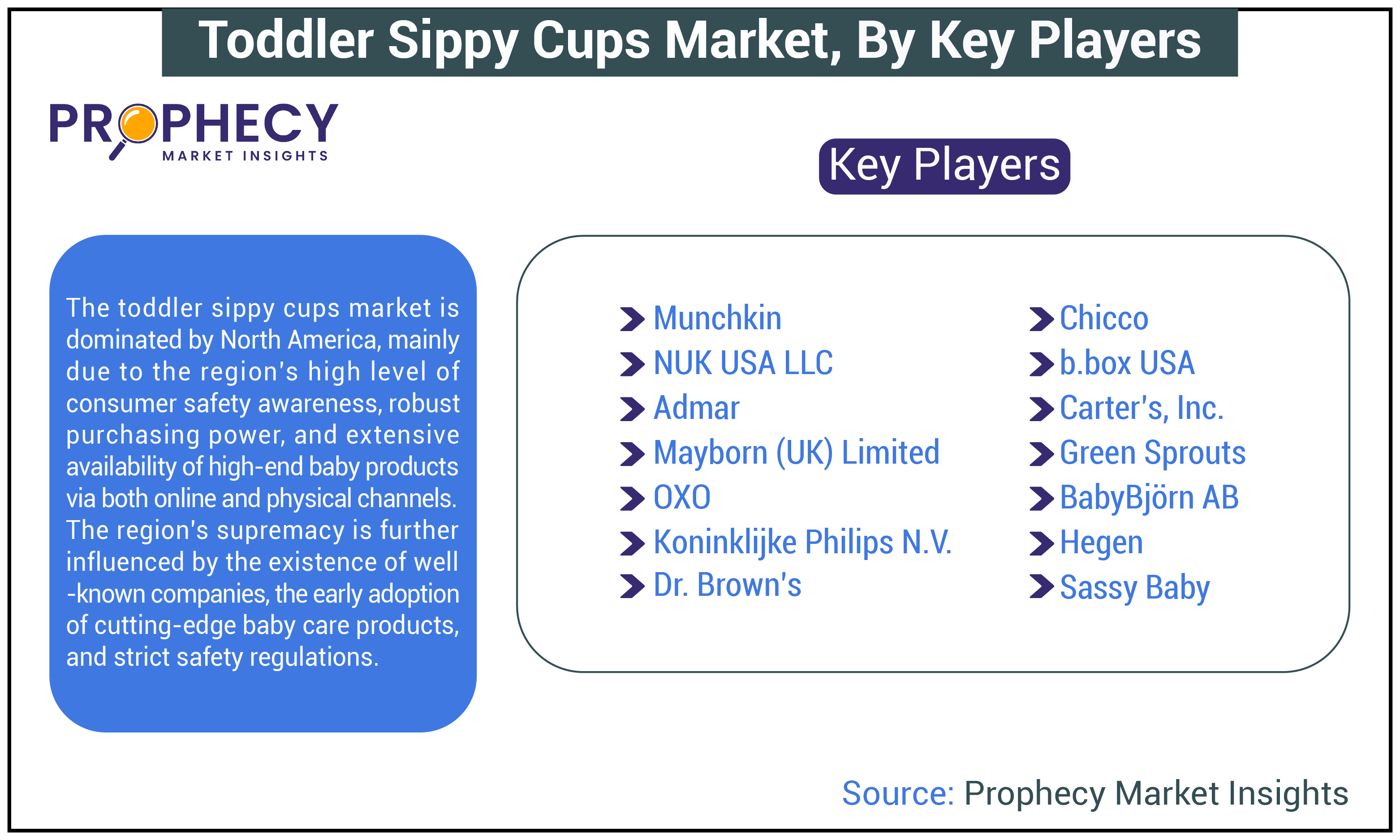
The key players operating in the toddler sippy cups market include, Munchkin, NUK USA LLC, b.box USA, OXO, Koninklijke Philips N.V., and others. Focusing on product innovation, such as creating age-appropriate, ergonomic, and spill-proof designs with safe, BPA-free, and environmentally friendly materials, is one of the main tactics for toddler sippy cup manufacturers. In order to meet the increased environmental consciousness of parents, businesses should also invest in sustainability programs and provide recyclable or reusable solutions.
Toddler Sippy Cups Market Companies:
- Munchkin
- NUK USA LLC
- Admar
- Mayborn (UK) Limited
- OXO
- Koninklijke Philips N.V.
- Dr. Brown’s
- Chicco
- b.box USA
- Carter’s, Inc.
- Green Sprouts
- BabyBjörn AB
- Hegen
- Sassy Baby
View an Additional List of Companies in the Toddler Sippy Cups Market
Global Toddler Sippy Cups Market Recent News
- In February 2022, in order to keep little superstars germ-free and mess-free while drinking, Tommee Tippee is launching a cutting-edge line of essential SuperStar cups with INTELLIVALVE and BACSHIELD technology. Every SuperStar cup is dishwasher and sterilizer safe and free of BPA, BPS, PVC, phthalates, and nitrosamines.
Analyst View:
The toddler sippy cups market is expanding rapidly due to factors such growing working parents looking for hassle-free products, growing parental knowledge of child development, and rising need for safe and convenient feeding solutions. Adoption of eco-friendly and BPA-free materials is also being driven by health and environmental concerns. Together, these elements highlight a robust and long-term market trajectory for toddler sippy cups globally, especially when combined with the growth of e-commerce platforms that provide accessibility to these goods.
More Related Reports
Asia Pacific Paper Cups Market
Europe Paper Cups Market
Paper Cups Market
Disposable Cups Market
Urine Testing Cups Market
Global Toddler Sippy Cups Market Company Profile
|
Company Name |
Koninklijke Philips N.V. |
|
Headquarter |
Amsterdam, the Netherlands |
|
CEO |
Roy Jakobs |
|
Employee Count |
67,823 Employees |
Global Toddler Sippy Cups Market Highlights
FAQs
Toddler sippy cups market size was valued at USD 1.5 Billion in 2025 and is expected to reach USD 3.5 Billion by 2035 growing at a CAGR of 9.7%.
Material type, closure type, age group, design features, brand ownership, and region are the segmentation for the target market.
North America, Asia Pacific, Europe, Latin America, and the Middle East & Africa. North America is expected to dominate the market.
The key players operating the toddler sippy cups market include Munchkin, NUK USA LLC, Admar, Mayborn (UK) Limited, OXO, Koninklijke Philips N.V., Dr. Brown’s, Chicco, b.box USA, Carter’s, Inc., Green Sprouts, BabyBjörn AB, Hegen, and Sassy Baby.